
Structure your content marketing to build editorial continuity
ContentCrea helps organizations connect their themes, plans, topics and content to keep their editorial production structured, consistent and usable over time.

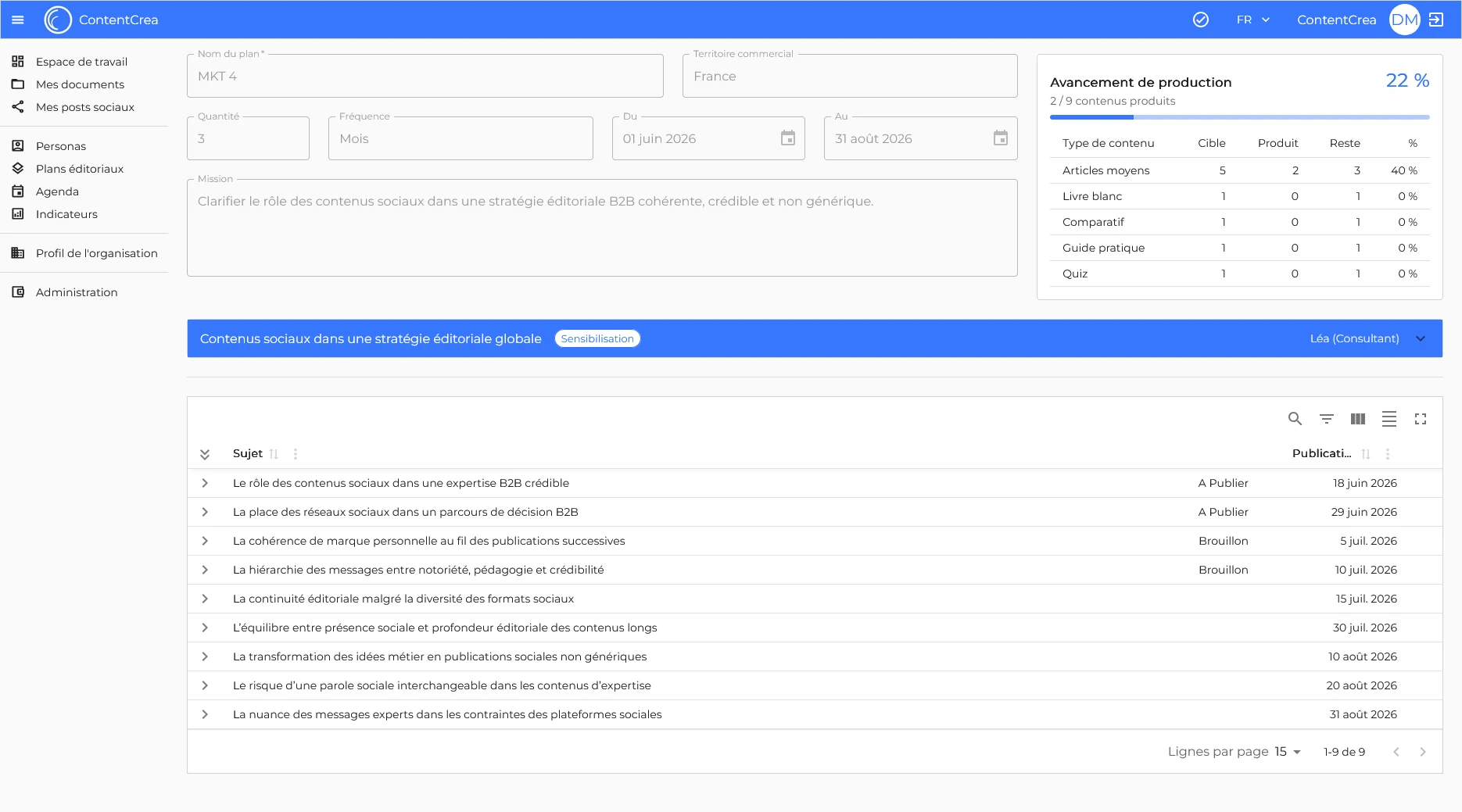
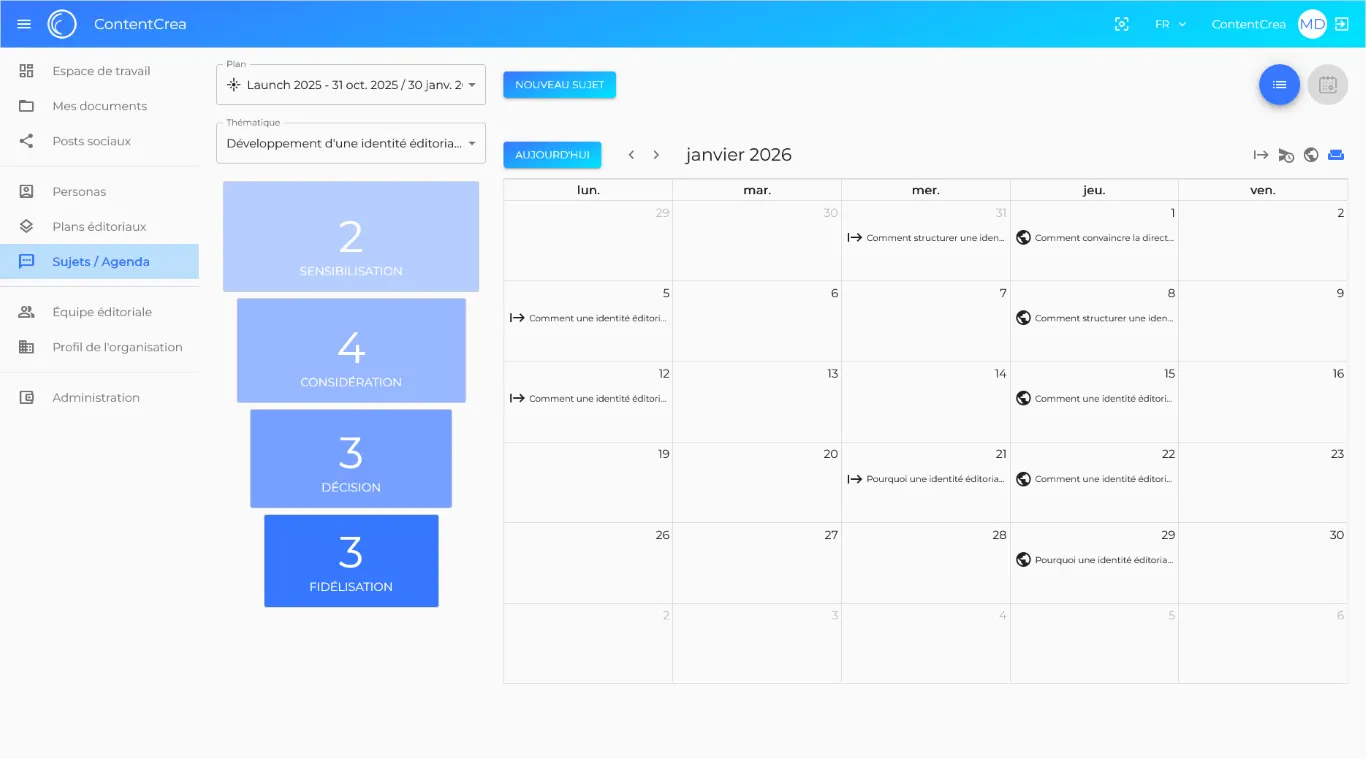
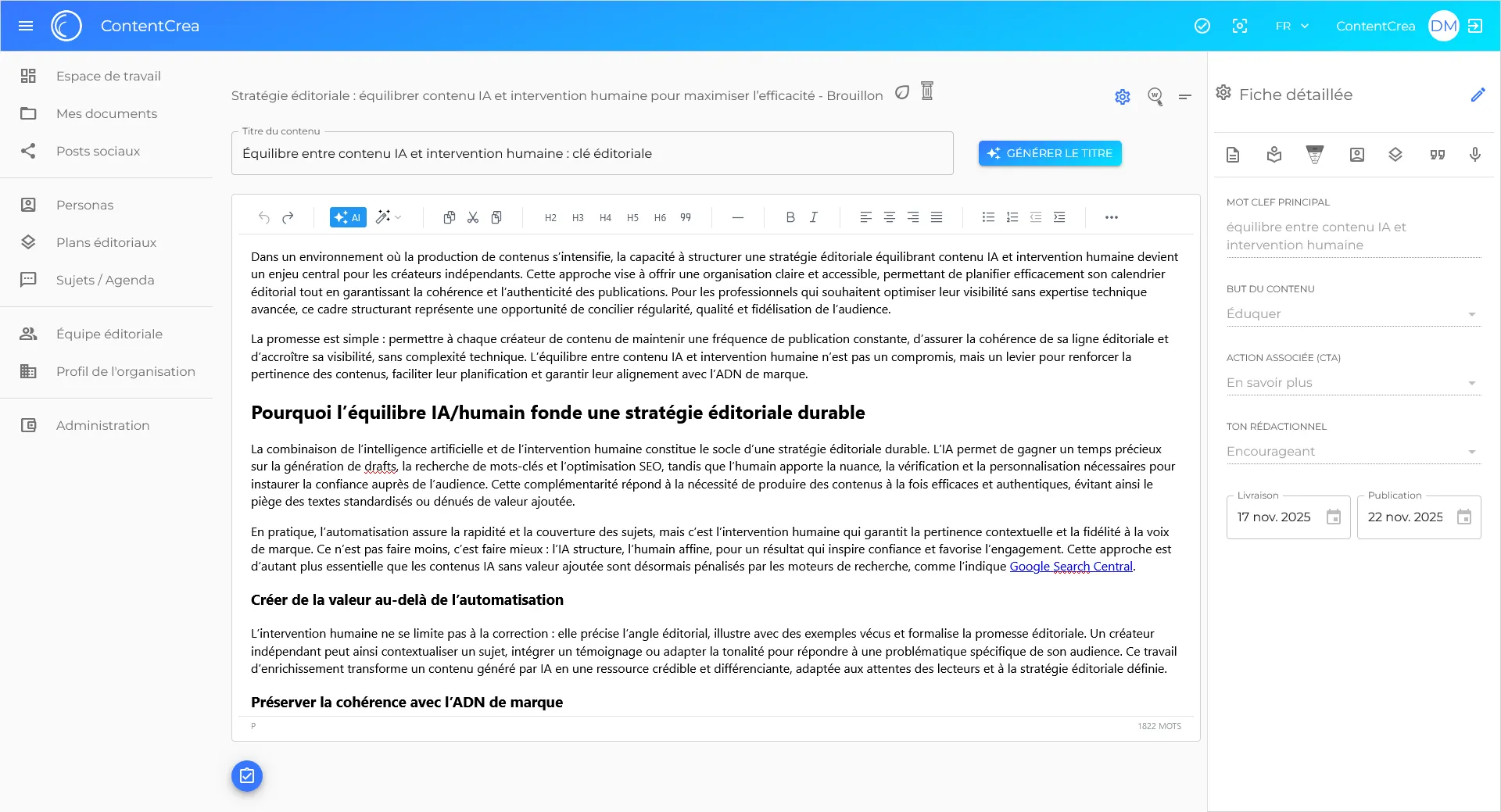


Producing content is no longer enough
Producing content has become easier than ever. Today, an organization can prepare articles, guides, social posts, FAQs or scripts faster than before, especially with the support of artificial intelligence. But this ease of production does not solve the central challenge of content marketing.
The real issue is not only producing more. It is understanding how content pieces are organized, what they build over time, and how they contribute to a consistent brand voice.
The ContentCrea method starts from this idea: a content piece should not be treated as an isolated output. It should fit into a structured editorial system, connected to objectives, audiences, themes and a clear progression.
The problem: Content treated as isolated pieces
In many organizations, content is produced based on ideas, urgent needs, SEO opportunities or immediate commercial priorities. Each content piece can be useful on its own. An article can answer a specific question. A social post can share a relevant idea. A guide can cover an important topic.
But when these content pieces are not connected to one another, their overall effect remains limited. They are added one after another without always building a clear trajectory. The brand publishes content, but the reader does not necessarily perceive what connects each piece of content.
This way of working creates several practical limitations:
- topics are sometimes addressed once, then abandoned;
- articles respond to different intentions, without a clear progression;
- content can repeat itself without truly going deeper;
- the editorial line becomes difficult to maintain over time;
- teams produce content, but make little use of what has already been published.
The problem is therefore not only a lack of content. It can also come from a lack of editorial architecture. Without a shared framework, production continues, but the overall system remains difficult to manage.
The ContentCrea method
Connecting content into a system
The ContentCrea method consists of organizing content before producing it, so that each publication has a clear function within a broader progression.
This approach is based on a simple principle: a content marketing strategy is not built only with well-written content. It is built with stable reference points. These reference points make it possible to know who the content is for, why a topic is being addressed, what level of maturity the reader has reached, and how each content piece extends what has already been published.
ContentCrea structures this logic around several elements:
- the organization’s editorial DNA;
- personas and their expectations;
- marketing objectives;
- editorial plans;
- themes;
- topics;
- the publication calendar;
- briefs;
- the content produced.
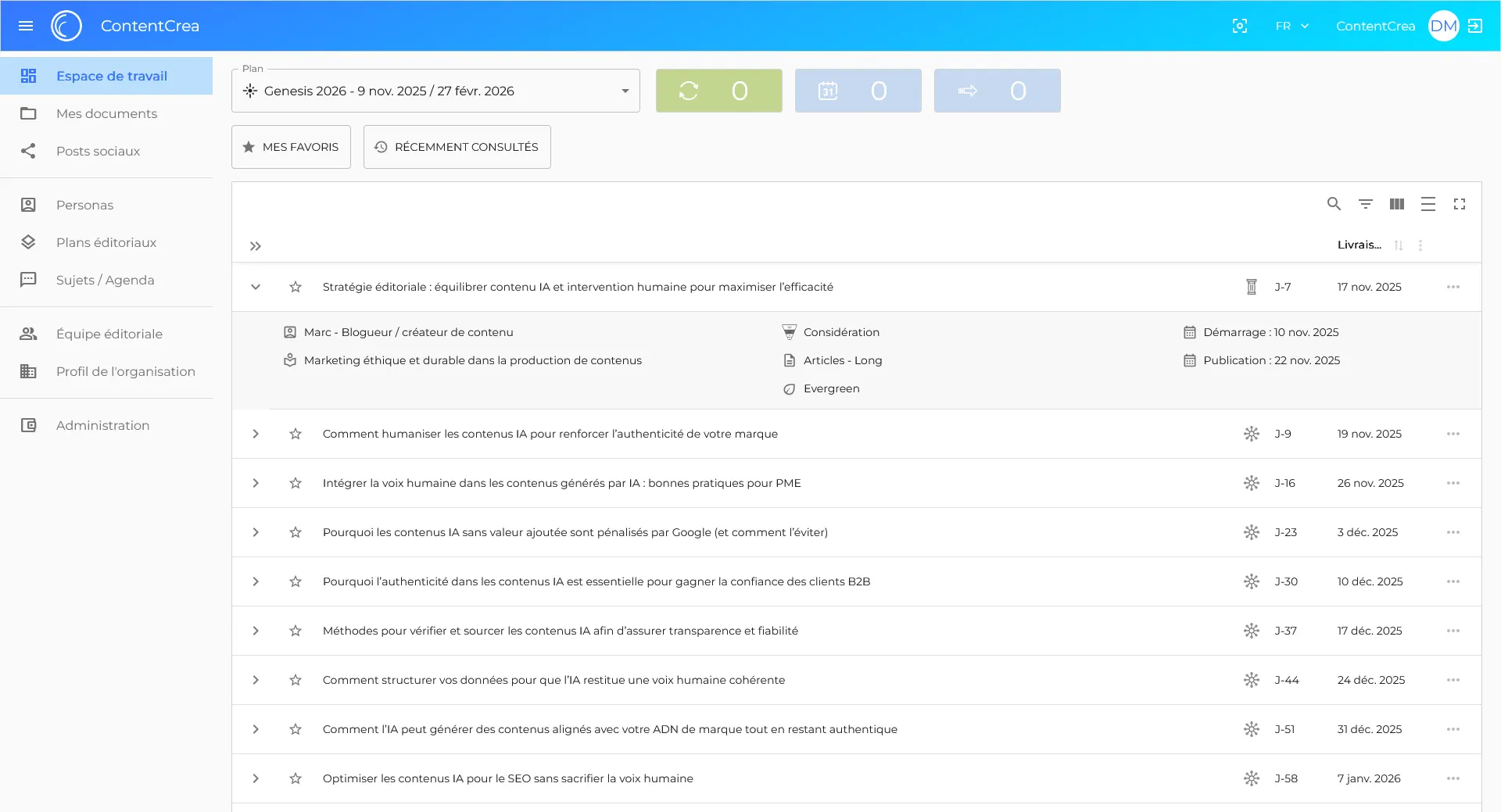
These elements do not work separately. They form a system. The editorial DNA defines the framework for the brand voice. Personas clarify the target readers. Plans organize priorities. Themes structure the main areas of focus. Topics make it possible to address each angle with precision. The calendar gives the content an order. Briefs frame production. The content then becomes the visible part of a more consistent whole.
The goal is not to make creation rigid. It is to reduce dispersion. When content pieces are connected to one another, they do not simply fill a calendar. They help build editorial continuity.
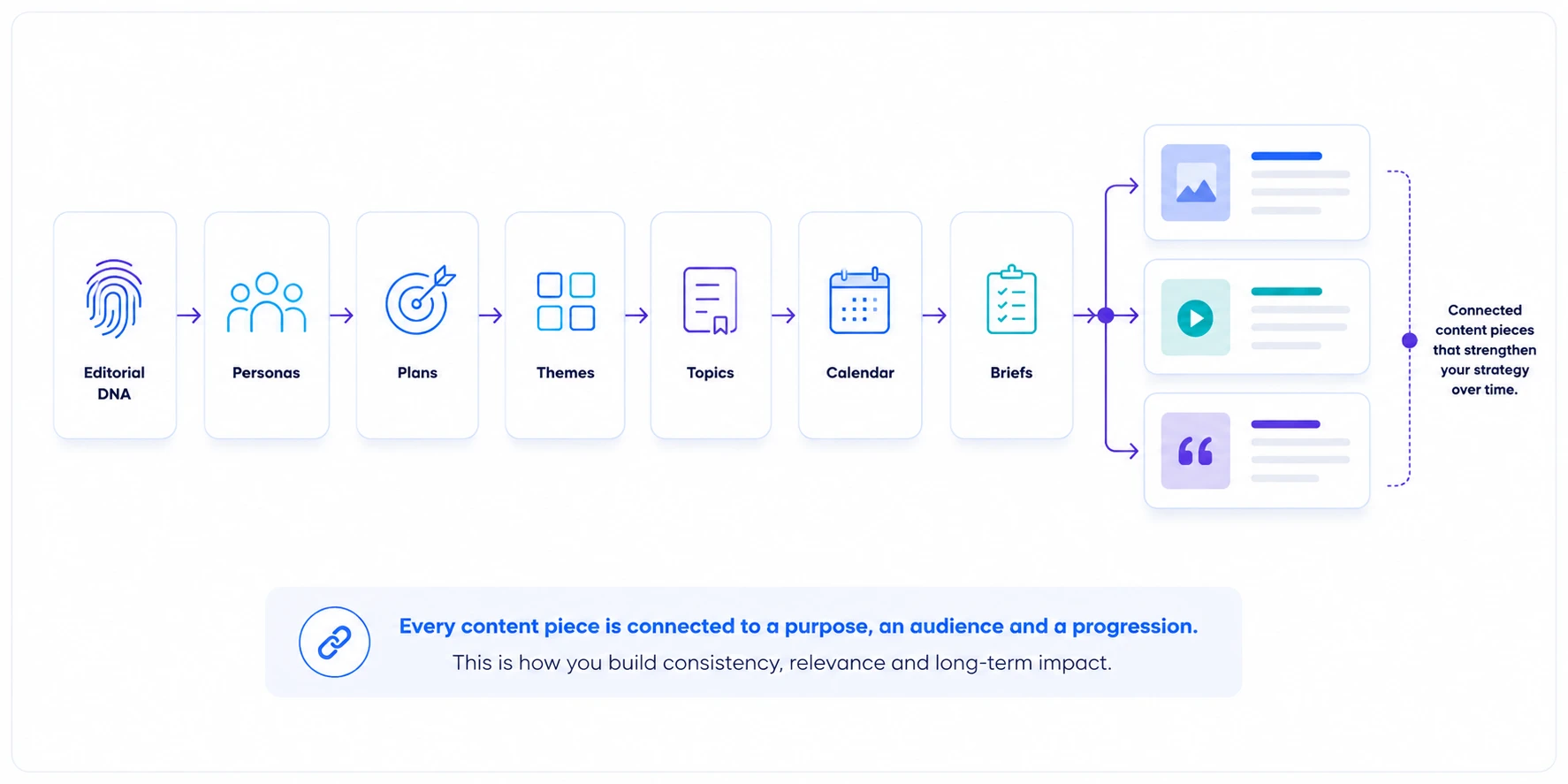
Moving a theme down the funnel
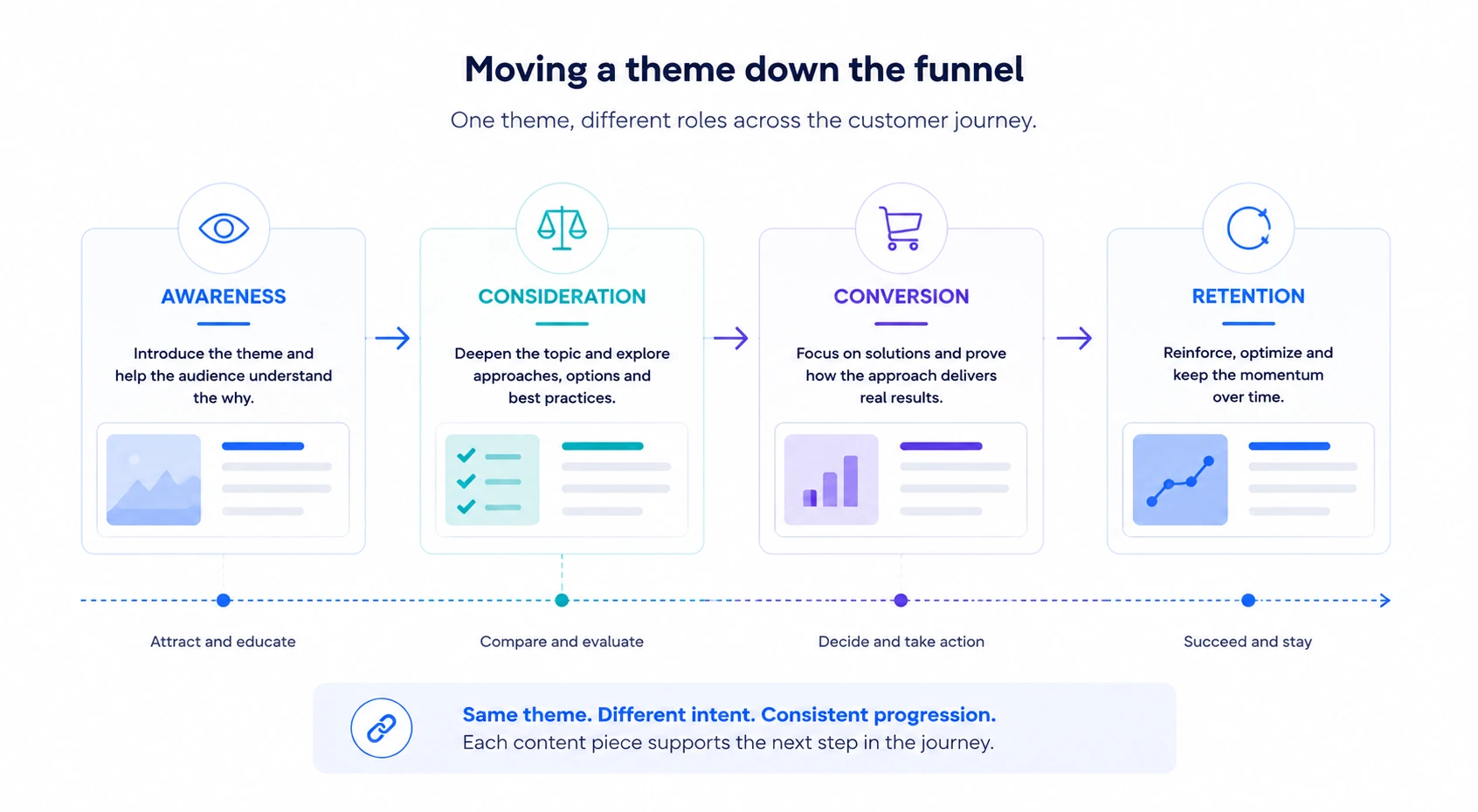
An editorial theme does not necessarily need to be addressed only once. It can evolve according to the reader’s level of maturity.
This is a central point of the ContentCrea method. An organization can introduce a theme at the awareness stage, deepen it at the consideration stage, connect it to an operational response at the conversion stage, then extend it at the retention stage. The subject does not change abruptly. The way it is addressed evolves.
For example, a theme such as editorial consistency can be approached in several ways:
- at the awareness stage, to show why consistency becomes more difficult when production increases;
- at the consideration stage, to explain how to organize editorial rules, priorities and decisions;
- at the conversion stage, to show how a system can help produce more consistent content;
- at the retention stage, to address how to maintain this consistency over time, with several contributors or several channels.
The theme remains the same, but its role changes. It does not always inform the reader in the same way. It gradually supports their understanding of the problem, then their evaluation of possible responses.
This logic differs from a simple succession of related articles. It is not only about covering a lexical field or multiplying content pieces around the same keyword. It is about building a clear editorial progression, in which each content piece prepares, extends or reinforces the others.
What this method changes
A clearer editorial strategy
Structuring content marketing first changes the way an organization decides what should be produced.
A topic is no longer chosen only because it seems interesting, because it matches a search query, or because there is a gap in the calendar. It is chosen because it serves a specific function within the editorial plan.
This method makes it easier to distinguish:
- what helps bring a problem to the surface;
- what helps the reader compare different approaches;
- what brings the topic closer to a solution;
- what extends the relationship after a first interaction;
- what should be published now;
- what can remain in reserve or be reworked later.
The editorial strategy then becomes easier to understand. Articles respond to one another. Topics are not abandoned after being addressed once. Internal linking becomes more logical. The brand voice remains more stable. Published content can be reused, extended or deepened with greater consistency.
This structuring becomes especially important when production accelerates. The easier it becomes to generate or prepare content, the greater the need for framing. Without a method, an organization may add volume without making its brand voice easier to understand.
With a method, each content piece can be placed within a wider system: what it explains, what it extends, what it prepares for, and what it contributes to the content strategy.
How ContentCrea applies it
From strategy to production
ContentCrea turns this method into a structured, supervised agentic process. The platform does not simply generate content from a one-off request. Each step builds on the context established in previous stages to prepare the next one, organizing the elements needed to produce consistent content over time while keeping users in control of key decisions and approvals.
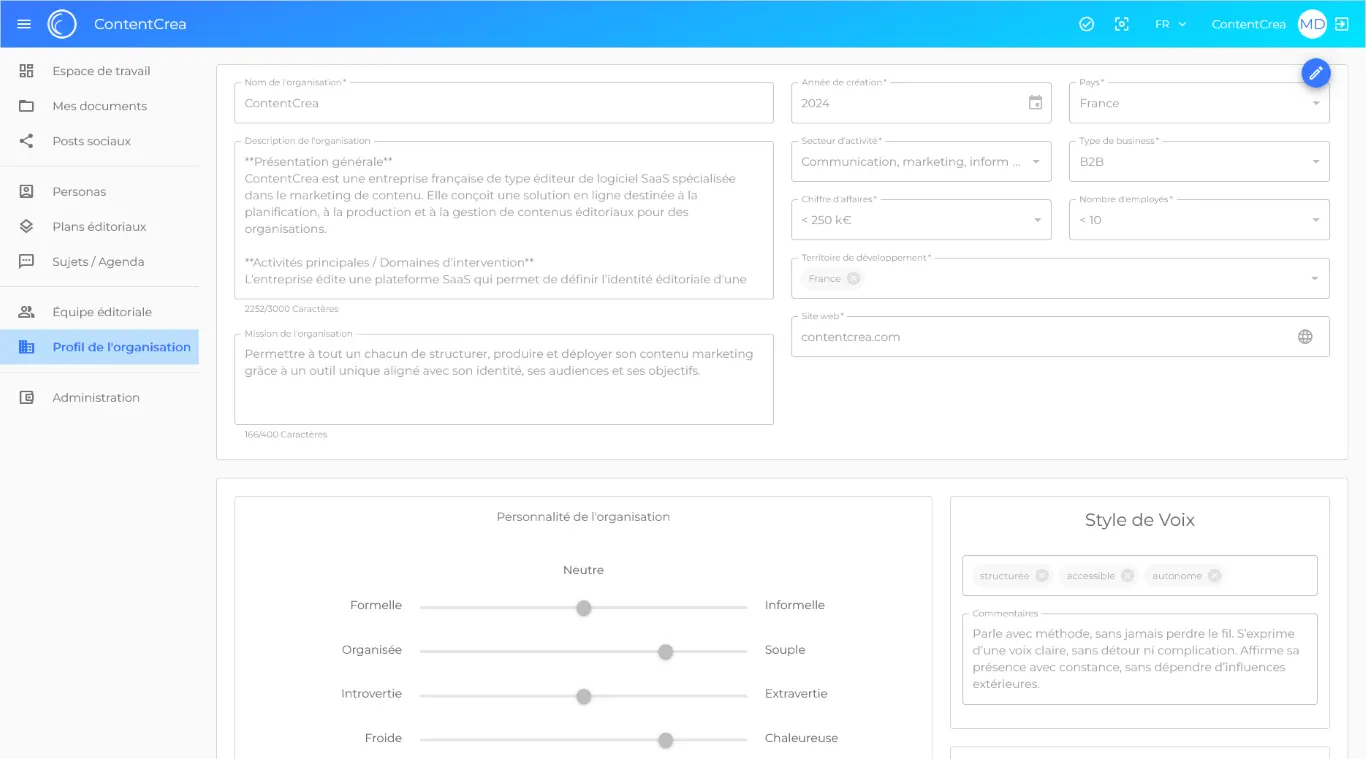
The work starts with the organization’s editorial identity: its personality, voice, tones, writing rules. This foundation prevents each content piece from starting from scratch.
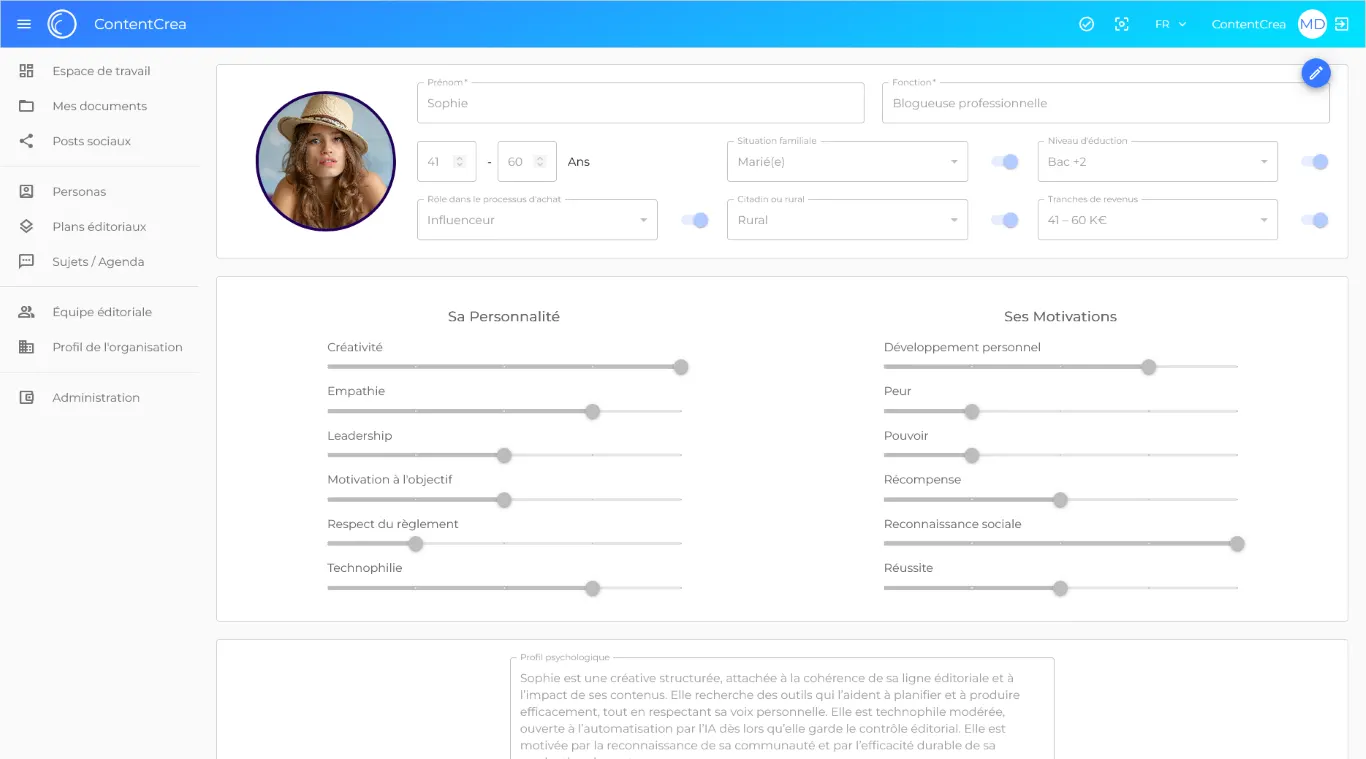
Personas then help clarify the target audiences. They make it possible to adapt content to readers’ expectations, needs, barriers and level of maturity.
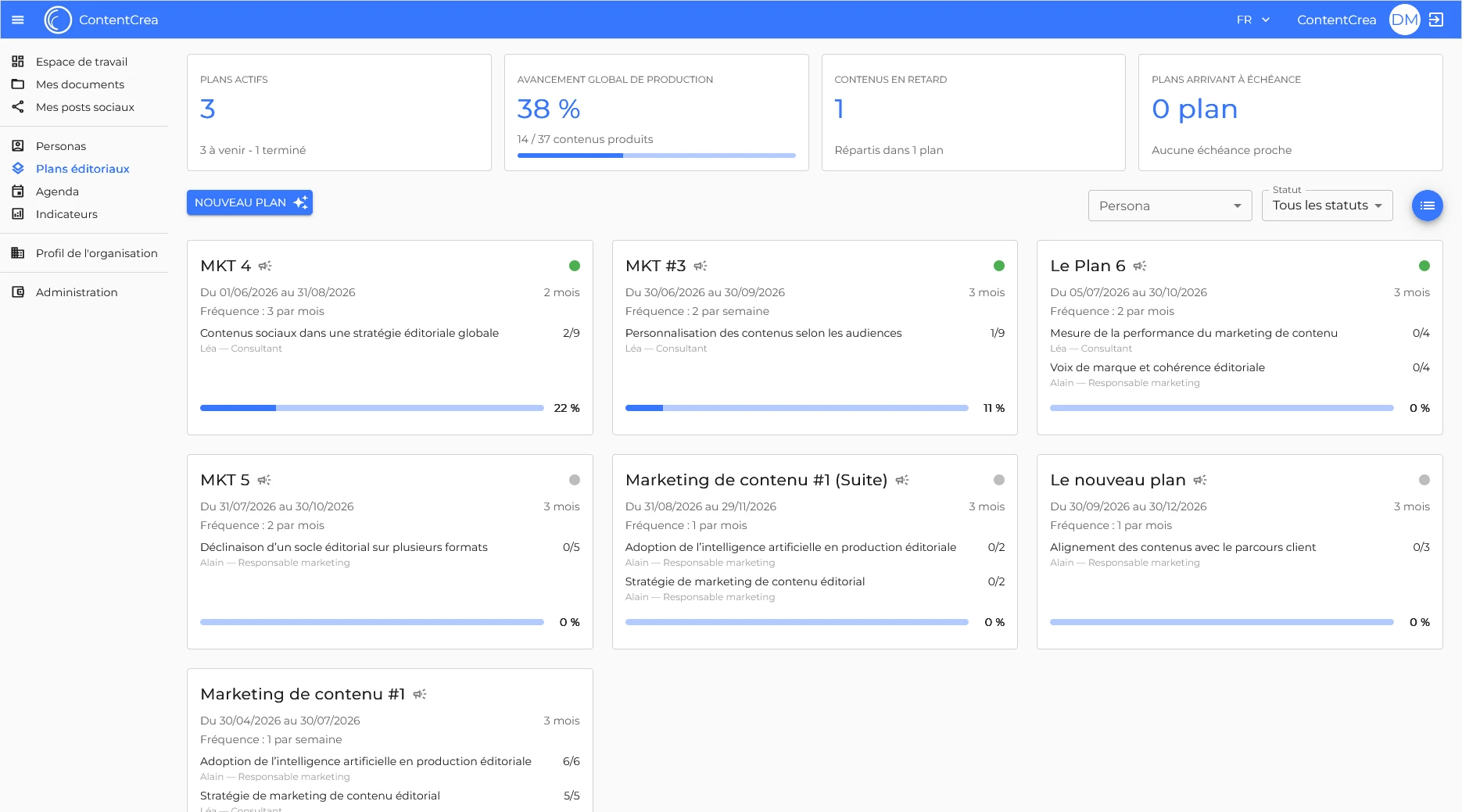
Content marketing plans structure the objectives, themes, topics and stages of the journey. They give production an organized framework instead of letting content accumulate without hierarchy.
The editorial calendar turns this strategy into a publication sequence. It helps order content over time, track its function and maintain a consistent progression.
Finally, briefs and content build on the previous elements. Writing therefore does not depend only on an isolated instruction. It fits into a broader editorial framework.
A solution designed to build editorial assets
Content is not only meant to be published. It can become an editorial asset when it fits into a broader system.
An editorial asset does not derive its value only from its existence. Its value comes from its ability to reinforce a position, extend a theme, stabilize a brand voice, inform an audience and remain usable over time.
This is the logic ContentCrea aims to make more accessible. The platform helps organizations move from scattered content production to a clearer, more connected and more manageable editorial organization.
The ContentCrea method is therefore based on a simple conviction: Content marketing does not become more valuable simply because content is produced faster. It gains value when it builds continuity.

Structure your content marketing with ContentCrea
You can try the platform with a 7-day free trial to explore the full process: structuring your editorial DNA, formalizing personas, building an marketing plan, organizing the calendar, and producing content.
